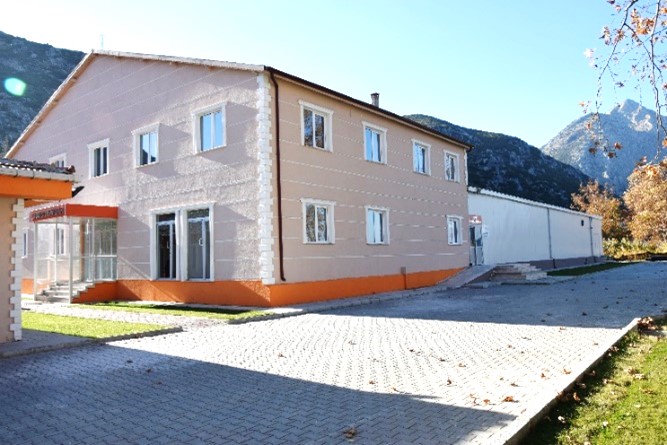
The Crayfish Research Center was established in 2014 within the scope of the "New Technologies in Crayfish Production and Processing Project" supported by BAKA (Western Mediterranean Development Agency) within our institution. The research center, which is the first and only crayfish hatchery with a closed circuit system in our country, has a total laboratory area of 600 square meters and a production and processing unit of 600 square meters. The facility, with a total water volume of tanks of 150 tons, has a treatment unit consisting of two parts and two different water systems. With such a facility, it is aimed to carry out all kinds of trial and research projects on crayfish and to provide more contribution to entrepreneurs in crayfish breeding.
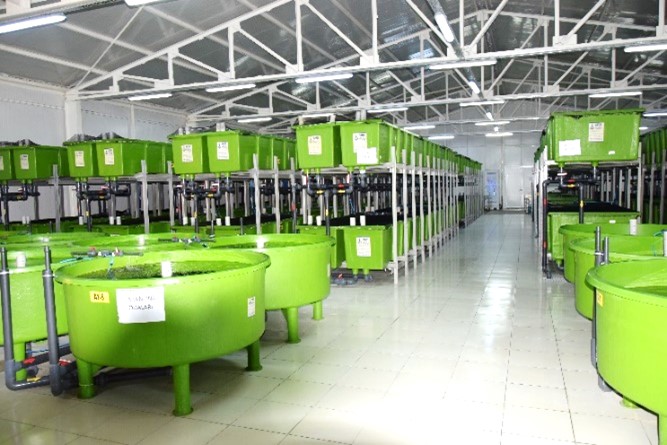
In addition, as a result of research and production activities by our Directorate in 2008-2009, approximately 2,500 units; Of the crayfish fry obtained in the 2017 crayfish production season, 4000 excluding the trial III. The mature baby was released into the lake. The Crayfish Research Center, which became operational in 2015, aims to find a solution to the crayfish plague disease, which causes a decrease in crayfish production in lakes, and projects to increase production through genetic studies.
• Fathead Minnow (Pseudophoxinus anatolicus Hanko, 1925) Production Trials:
Fathead minnow (Pseudophoxinus anatolicus Hanko, 1925) belongs to the Cyprinidae (carp family) and is an endemic species found in some lakes and streams in Konya and Karaman provinces of our country. It has been declared an endangered species by the International Union for Conservation of Nature (IUCN) and included in the red list.
In order to introduce new species into production, aquaculture research of this species has started at our Crayfish Research Center. With the project work "Investigation of Production Possibilities of Fathead Minnow" supported by our Ministry, it is aimed to create the production and cultivation protocols of this species and present them to the sector. Thus, it is planned to be an alternative species that can be cultivated in our inland waters.
• Pike-Perch (Sander lucioperca) Aquaculture Trials:
Pike-perch is one of the most valuable freshwater carnivorous fish species in Europe. Pike-perch, which is at the top of the food chain, is a key species for the bio-manipulation of natural waters and is also highly valuable for human consumption. The pike-perch offered for human consumption is predominantly obtained through fishing from natural waters.
The pike-perch aquaculture studies, which we started as an institute activity, are very promising for the future. In 2018, we successfully completed egg and larva production, as well as the feeding of larvae with live feed and subsequent adaptation to pellet feed. To further these studies and fully establish the production protocol for pike-perch, we have applied for a project to the Tübitak 1505 University-Industry Cooperation Support Program.
The rapid growth to market size and its economic value, being 2-3 times more compared to trout, along with the 2 billion dollar fishery export target set by our Ministry until 2023, make pike-perch aquaculture studies continue under our institute.
• Vimba Bream (Vimba vimba) Aquaculture Trials:
During the fishing operations we conducted to obtain brood pike-perch, vimba bream (Vimba vimba) broodstocks caught in the net were milked under field conditions, and the fertilized eggs obtained were brought to our Crayfish Research Center. The incubation of the eggs was successfully completed at the Crayfish Research Center, and approximately 1000 vimba bream larvae were obtained. The growth performance of these larvae is still being monitored.
• Aquarium Fish Production Trials:
In the Crayfish Research Center, aquarium fish production trials are being conducted, primarily focusing on goldfish (Carassius auratus) and koi (Cyprinus carpio carpio). In this context, research activities related to the breeding and raising of aquarium fish are ongoing.
• Carp (Cyprinus carpio) Aquaculture Trials:
In our institute's hatchery, carp production is being carried out, primarily for stocking Eğirdir Lake and potentially other inland waters. In 2023, 150,000 carp were produced in partnership with Eğirdir Municipality.
• Other Research Activities:
Projects titled "Use of Ginger (Zingiber officinale) and Black Cumin (Nigella sativa) as Immunostimulants in Rainbow Trout (Oncorhynchus mykiss, Walbaum 1792)" and "Use of Ginger in Brood and Juvenile Rainbow Trout" focus on reducing the negative effects of chemotherapeutics commonly used in fish and other aquatic products on human and environmental health, and ecological balance. By creating alternative products using medicinal plants like ginger and black cumin, easily accessible, and affordable immune-boosting products are recommended to producers