Mass Rearing of Mutant Mediterranean Fruit Fly Ceratitis capitata, Wiedemann (Diptera: Tephritidae) and Field Release of Sterilized Flies for the Sterile Insect Technique (SIT)
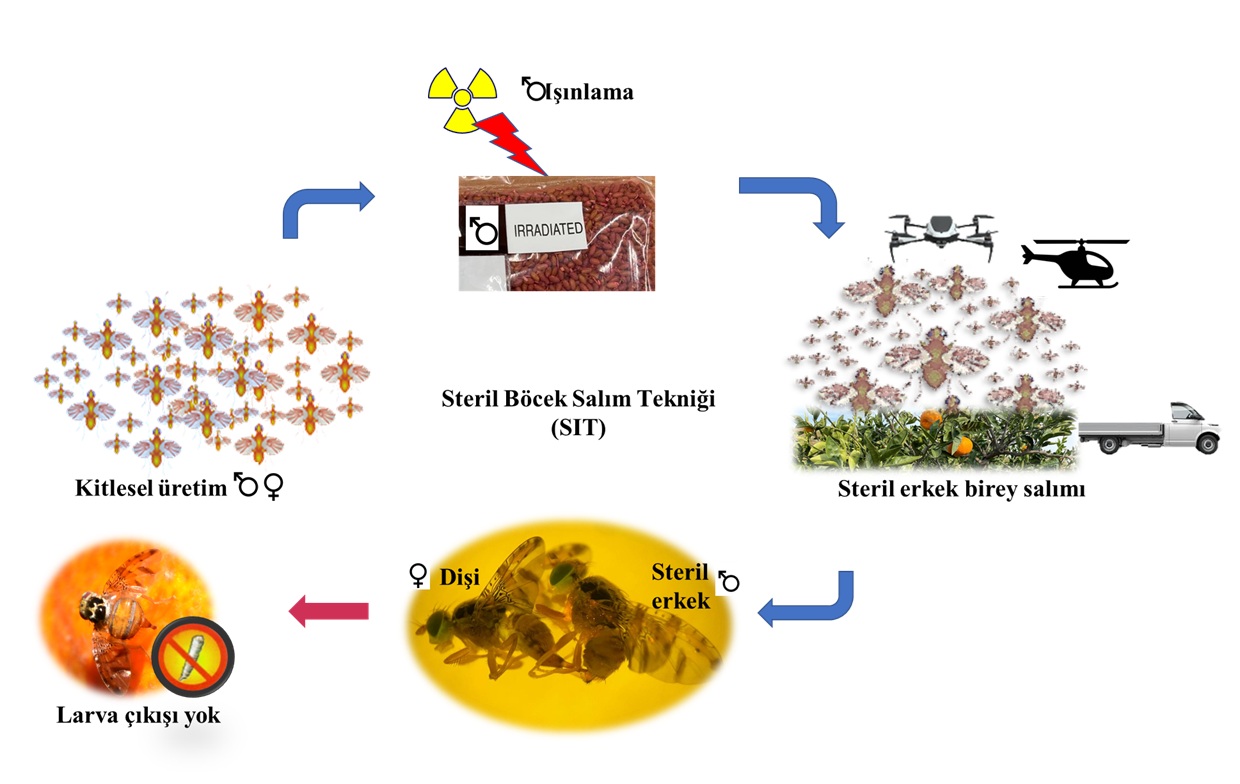
The Sterile Insect Technique (SIT), one of the most effective and large-scale biotechnical control methods, is successfully used as an alternative to chemical application to control the Ceratitis capitata due to concerns over food and environmental safety.
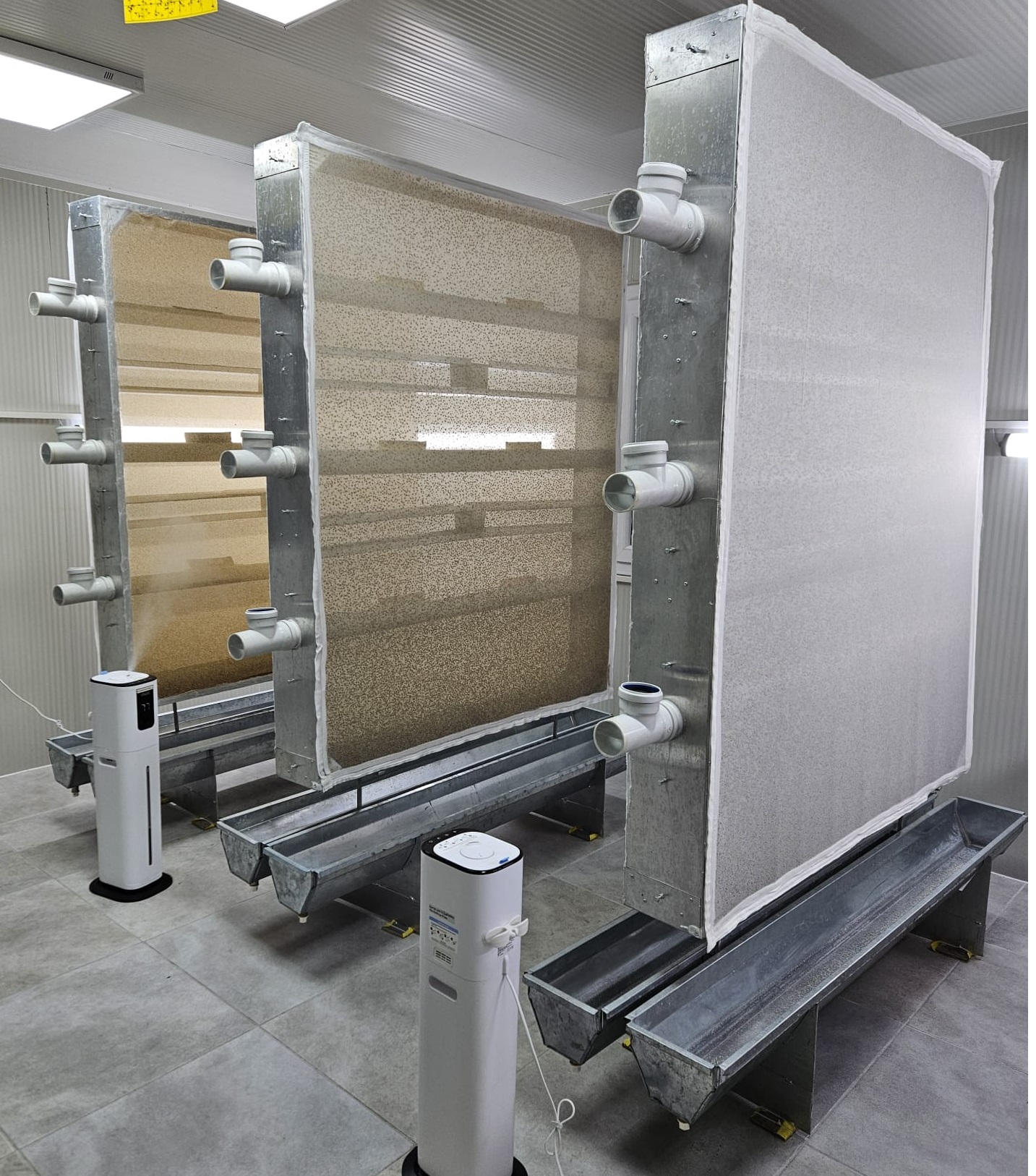
Mass rearing of Mutant Ceratitis capitata is conducted in climate-controlled rooms under laboratory conditions, maintained at 25±1°C, 65±5% relative humidity, and a photoperiod of 16 hours light and 8 hours dark, using aluminum adult cages covered with tulle on both sides. Adult flies reach sexual maturity 4–5 days after emergence, and eggs laid by females are collected daily. In the SIT approach, female individuals are eliminated at the egg stage, allowing for mass production of only male flies.
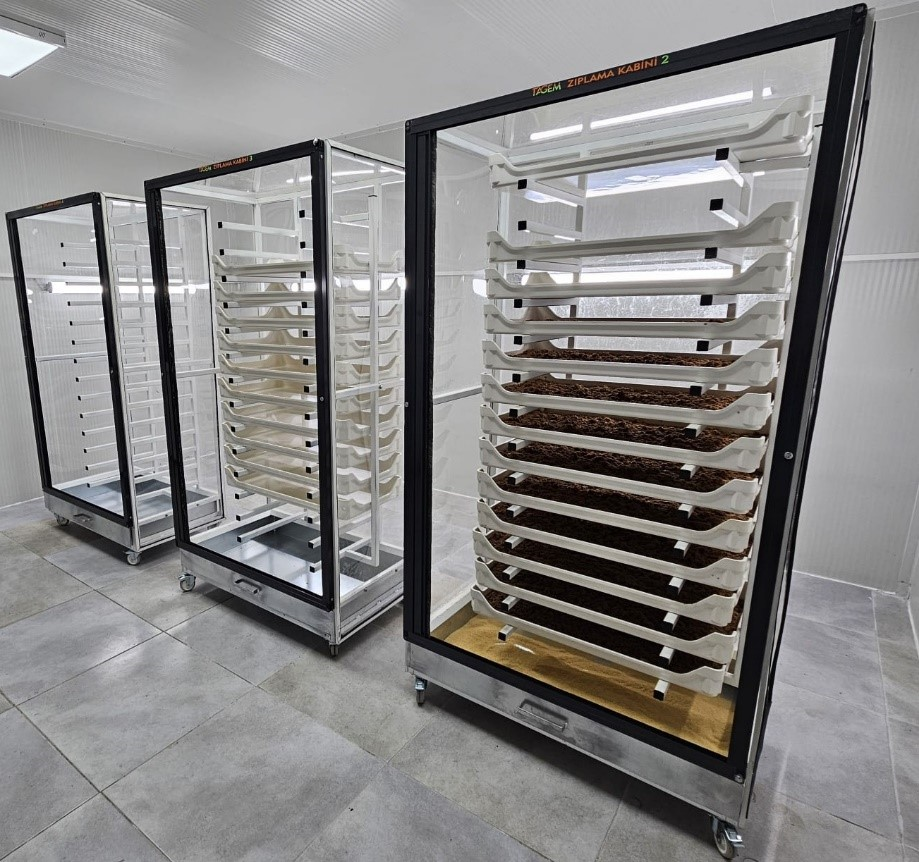
Egg trays are placed on top of each other and incubated in a controlled climate room for approximately 10 days for egg hatching and larval development. Mature larvae jump and pupate in the sawdust under the trays. The sawdust is sifted daily to collect the pupae. The pupal colour of mutant individuals mass-produced in the laboratory is decisive. Male flies emerge from brown pupae, while female flies emerge from white pupae.
At the Bornova Plant Protection Research Institute, mass production of Mutant Ceratitis capitata is carried out at a capacity of 50 million/ week.
Before irradiation, the pupae are marked with fluorescent dye (Day-Glo® powder) to differentiate them from wild individuals. The marked pupae are irradiated two days before emergence to induce sterility. Sterile adult males emerge approximately 48 hours after irradiation and are transferred to adult cages supplied with water and adult diet. Once they reach sexual maturity, the sterile males are released weekly from the ground at pre-determined field locations.